Ads are about to sit beside the images you generate
OpenAI is rolling out display ads shown next to the pictures you create in ChatGPT. They are labeled and kept out of the image itself - and that separation is exactly what makes the move worth paying attention to, not dismissing.
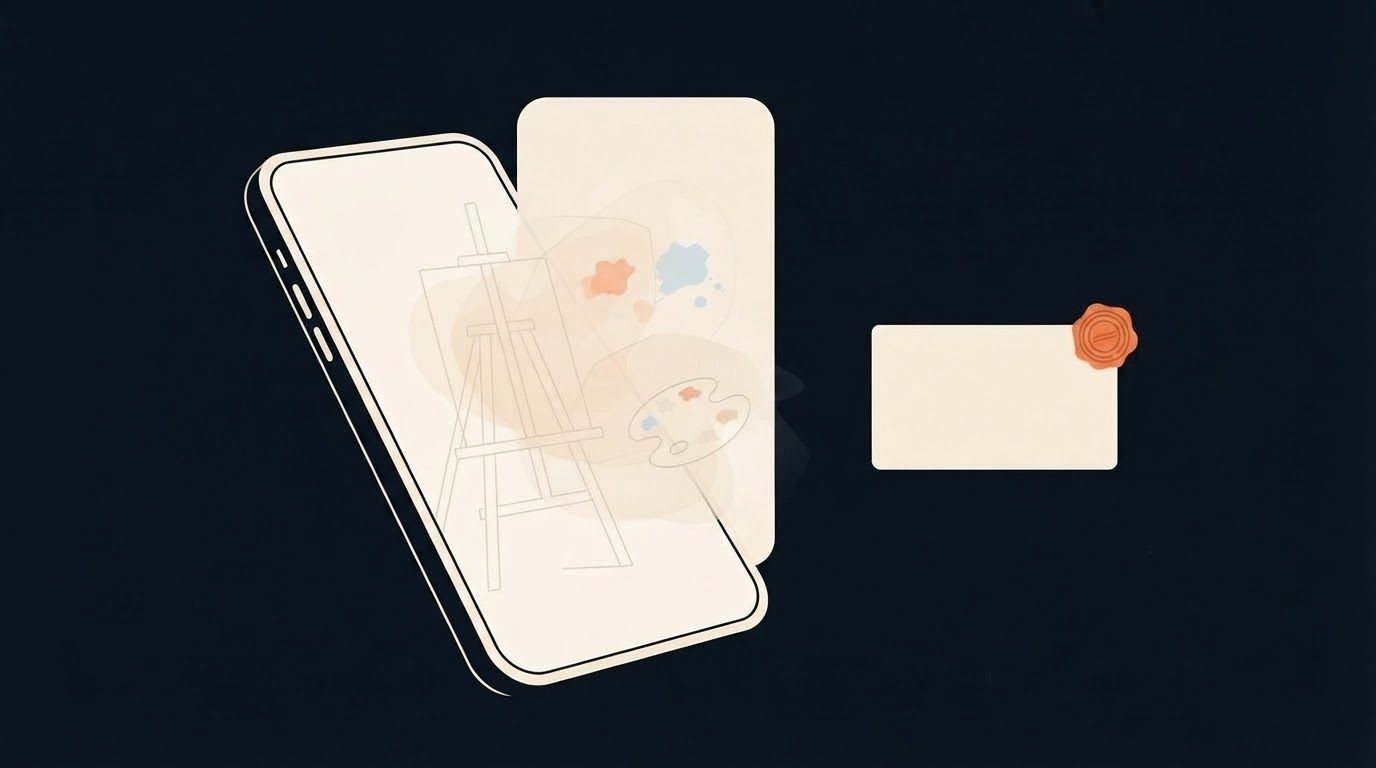
On the fifth of October, OpenAI said it is adding a new visual ad format that will appear during image generation in ChatGPT. Testing begins later this month in the United States, with an initial group of advertisers, and the ads show product images with “Learn more” buttons. It is the first time a display ad sits inside one of the creative tools rather than below a text answer, and the way the company announced it is doing a lot of careful housing.
“Ads will be clearly labeled, and remain separate from the image being created. As with our other ad formats, advertising does not influence the answers ChatGPT provides.”
Source: OpenAI, Building advertising for the way people use AI (2026-10-05)
That is the official framing, and it is genuinely careful. The ad is not composited into the picture you asked for. It does not steer the output. It is a separate card near the creative surface. OpenAI has said the same thing about its text ads since January, when the company set out its advertising principles under the headline “Our approach to advertising and expanding access to ChatGPT” - answer independence, conversation privacy, choice and control. The paid plans are off-limits to ad inventory entirely. Sarah Perez, covering the announcement for TechCrunch, noted the timing plainly: the move follows the launch of Meta's agentic app Muse, a free competitor to the leading chatbots - advertising is how the free tier stays free in a race where the other player is free too.
“Ads may appear for users on the Free and Go plans. Plus, Pro, Business, Enterprise, and Edu accounts will not have ads.”
A slot with its own logic
An ad below a text answer sits after the thing you asked for. An ad beside a generated image sits next to the thing you are making. That difference is the whole story. Generating an image is where ChatGPT users think out loud in pictures - a moodboard for a rebrand, a reference for a redesign, a birthday card you are shaping for someone, a thumbnail you have been picturing for a week. The tool is a workshop. A display ad inside it turns a corner of the workshop into a storefront.
The mechanism is worth being precise about, because it is not sinister in the common way. To show a relevant ad, the system reads the context and intent of the current conversation, and - when personalization is turned on - signals from the wider experience and memory. The same conversation that tells ChatGPT what kind of poster you want is the conversation that tells its ad system what category you are browsing. The relevance that makes an image prompt useful is the same signal that makes an ad clickable. The intimacy is the inventory.
Advertising built on that archive creates a potential for manipulating users in ways we don't have the tools to understand, let alone prevent.
— Zoë Hitzig, in “OpenAI Is Making the Mistakes Facebook Made. I Quit.”
That line is from a guest essay by Zoë Hitzig, a researcher who resigned from OpenAI in February - in the same week the company began testing its text ads - arguing that ChatGPT had accumulated “an archive of human candor that has no precedent” precisely because people believed they were talking to something without an ulterior agenda. Her essay was about the text ads that arrived eight months before these image-adjacent ones. Nothing OpenAI has said since makes the concern smaller; the placement simply changes the part of your conversation that is for sale.
What the separation really separates
Here is the honest part: paying for image generation is a real cost, and advertising is how many tools reach people who cannot pay. The labels are not decorative - OpenAI says advertisers have no ability to shape, rank, or alter the model's responses, and that the two run on separate systems. If we accept ad-supported tools at all, this is a defensible version, and the negative-space illustration on the announcement page - a phone screen and a tag kept apart - is doing exactly the argument wrestling you would want it to.
But accepting a principle is not the same as accepting every placement that follows from it. The question the image slot raises is whether the creative surface should be ad inventory at all, or whether the label and the separation are doing the work of making a trade that deserved a public argument look uncontroversial. The industrial view of the same move is not shy about what it is. The head of one of the ad-measurement companies OpenAI is partnering with put it plainly.
ChatGPT is creating a fundamentally different advertising environment, where context is defined by the conversation itself rather than a page or video.
— Mark Zagorski, CEO of DoubleVerify, in OpenAI's announcement
A slot that will get wider
The people who use image generators on the free tier are the ones who cannot pay to leave, and they are the ones who will see the ads. The announcement does not stop at one format - it says OpenAI will “continue to evolve our ad platform with new formats and capabilities.” A labeled card you can ignore tends, over years, to become a grid of cards wherever there is room, and to feed the ranking system the very conversations it is set beside. That is not a prediction of bad faith; it is the ordinary direction of a revenue line that has decided a creative surface is a placement.
The strongest argument against worrying here is that a clearly labeled, easily ignored ad next to an image is a small thing, and that conflating it with a personal-data scandal gives it more credit than it deserves. There is truth in that. It is why the essay should not overclaim. The point is not that this one card will manipulate you; it is that the boundary that used to divide “the tool that helps me make” from “the page that sells to me” has moved. Once the place where we think in pictures has a price, the honest disagreement is no longer about this ad - it is about whether we wanted that boundary to move at all.
On the fifth of October the boundary moved. The ads are coming to the United States this month, clearly labeled, kept out of the image, and brokered by a company that has promised, in writing, that its model's answers stay independent. All of that is true, and none of it changes the quieter fact: the workshop has a window now, and a shopper is standing in it.
Sources and further reading
- OpenAI, Building advertising for the way people use AI (2026-10-05)
- OpenAI Help Center, Ads in ChatGPT
- OpenAI, Our approach to advertising and expanding access to ChatGPT (2026-01-16)
- TechCrunch, OpenAI launches visual ads that appear alongside image generation results (2026-10-05)
- The New York Times, Zoë Hitzig, OpenAI Is Making the Mistakes Facebook Made. I Quit. (2026-02-11)
We use AI tools in our research and drafting on this site. Every judgement and every recommendation is a person's.