Hollywood Is Suing AI Video With One Hand and Buying It With the Other
Disney called ByteDance's Seedance a 'virtual smash-and-grab' of its characters in February — then kept the billion-dollar OpenAI deal that puts those same characters in Sora. The fight was never about whether AI would make films. It is about who sits in the centre of the process.
In February an AI-generated clip went around the internet. Two men fought in a street and the audience recognised them instantly: Tom Cruise and Brad Pitt, trading blows in a scene no one had ever shot. It was fake. It was made with Seedance, the upgraded video generator ByteDance released on 12 February, and it required nothing more than a short text prompt.
Rhett Reese, who co-wrote Deadpool & Wolverine, watched it and reached for the phrase that would become the story's headline.
It is likely over for us.
— Rhett Reese, co-writer of Deadpool & Wolverine and Zombieland, on X, February 2026
Reese went on to explain what he meant, and the explanation was the honest version of the panic. A person with talent and taste, he reasoned, would soon sit at a computer and make a movie indistinguishable from what Hollywood releases.
In next to no time, one person is going to be able to sit at a computer and create a movie indistinguishable from what Hollywood now releases. True, if that person is no good, it will suck. But if that person possesses Christopher Nolan's talent and taste, it will be tremendous.
— Rhett Reese, co-writer of Deadpool & Wolverine, on X, February 2026
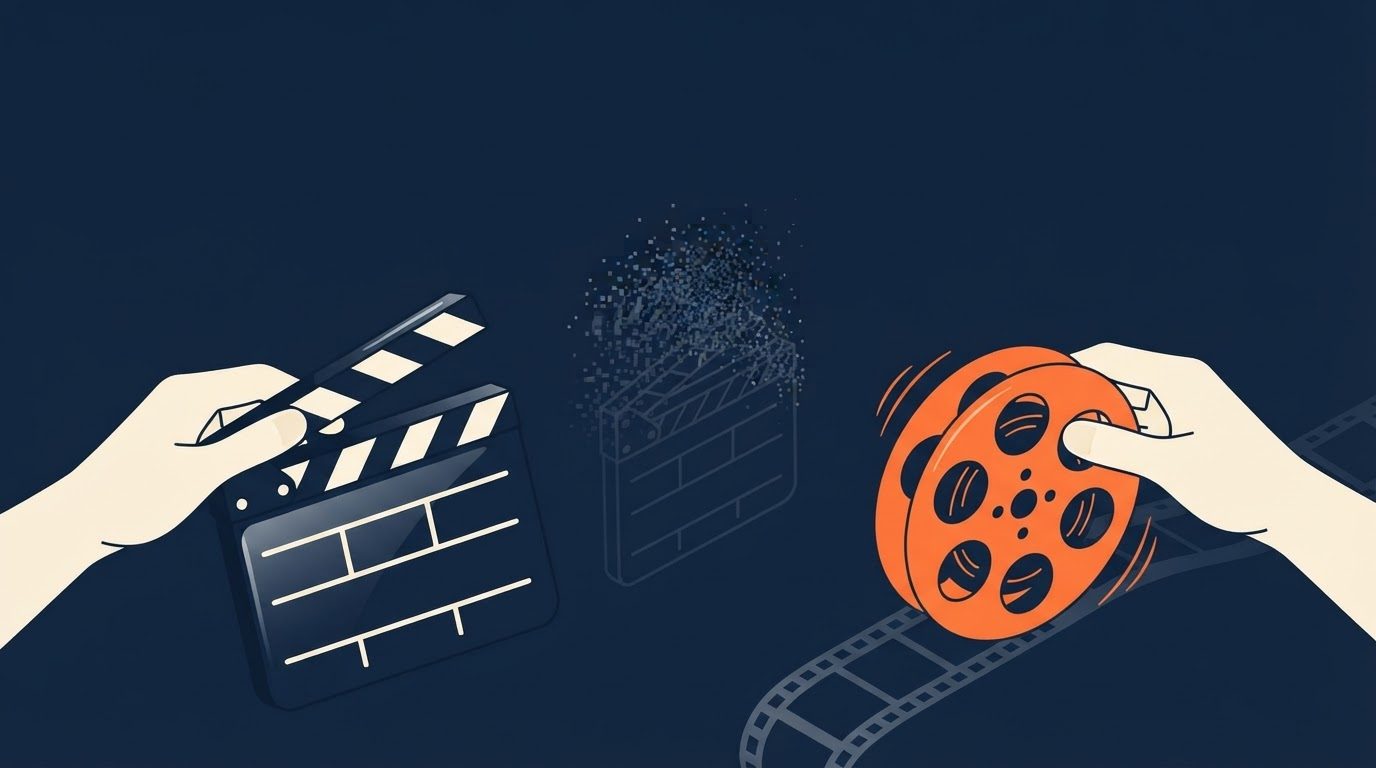
What happened next in Hollywood is the part worth slowing down for, because the industry did not do the obvious thing. It did not ban AI video, or unite against it, or even agree on what the threat was. It split, loudly, into two camps that behaved as if they were working for different companies — and in a sense they were.
The hand that sues
The fist came down on ByteDance. On a Friday, Walt Disney sent the company a cease-and-desist letter accusing it of supplying Seedance with a pirated library of its copyrighted characters, including those from Marvel and Star Wars.
Disney's lawyers accused ByteDance of a 'virtual smash-and-grab' of the studio's intellectual property, including superheroes from Marvel, Star Wars and various cartoons, in a cease-and-desist letter over Seedance.
Source: BBC News, February 2026
The rest of the industry piled on. Paramount Skydance reportedly sent its own cease-and-desist. The Motion Picture Association, which represents studios including Warner Bros and Netflix, demanded the tool 'immediately cease its infringing activity'. SAG-AFTRA, the actors' union, accused Seedance of 'blatant infringement'. Japan's government opened an investigation after AI videos of anime characters spread online.
The Motion Picture Association accused ByteDance of 'unauthorised use of US copyrighted works on a massive scale'; SAG-AFTRA accused Seedance of 'blatant infringement'.
Source: The Guardian, 16 February 2026
It was not the industry's first such letter. Disney and NBCUniversal had already sued the image generator Midjourney the year before, accusing it of producing 'endless unauthorised copies' of their works. The pattern is familiar: an AI tool that can imitate what a studio owns, and a studio that sues or threatens to.
The hand that pays
Now read the other column, because it happened in the same months and got far less airtime as an existential story.
In March, Netflix bought InterPositive, the AI company founded by Ben Affleck. The deal, closed in cash, came to $587 million according to Netflix's own filing with the SEC, and it handed the streamer the entire 16-person team plus Affleck as a senior adviser.
Netflix paid $587 million in cash for InterPositive, the AI postproduction start-up founded by Ben Affleck, according to the company's SEC Form 10-Q. Affleck joined Netflix as a senior adviser with his 16-person team.
And the deal before that was bigger than both. In December, Disney announced a $1 billion equity investment in OpenAI and a three-year licensing agreement that gives Sora access to more than 200 characters from Disney, Pixar, Marvel and Star Wars — Mickey Mouse, Stitch, Simba, Darth Vader, the lot — for fan-made short videos.
Disney is the global gold standard for storytelling, and we're excited to partner to allow Sora and ChatGPT Images to expand the way people create and experience great content.
— Sam Altman, chief executive of OpenAI, December 2025
So, to be precise about it: in the space of a few months, the industry that called ByteDance's text-prompt video generator a smash-and-grab of its characters invested a billion dollars in another text-prompt video generator and quietly handed over access to those same characters. It threatened to shut down one tool that could imitate its IP, and paid to build another that could. The two hands knew about each other. Neither let go.
The line they think they are drawing
The obvious reading is that Hollywood is being hypocritical, and there is something to that. But the more useful reading is that the industry is drawing a line, and the line is not what the headlines said it was.
The tools that get sued are the ones that copy without paying and without asking. Seedance generates Tom Cruise fighting Brad Pitt because it was trained on footage of those actors. The studios' lawyers can point at that and say, clearly, you took something and made a product from it.
The tools that get bought and funded are the ones that make the same technology look like it belongs to the people on set. InterPositive does not generate films from nothing. Affleck was emphatic about this: it builds a model from a production's own dailies — the footage a film crew has already shot — and lets filmmakers use it for the work nobody wants to own the drudgery of, like relighting, recolouring and fixing shots.
It's not about text-prompting or generating something from nothing. [It's about] keeping creative decisions in the hands of artists.
— Ben Affleck, on InterPositive's approach, 2026
That is the shape of the deal Hollywood keeps signing. AI is acceptable when it works inside the studio's own pictures, on the team's own footage, under the filmmaker's own authority, and rejects it the moment it becomes a tool anyone can point at characters they do not own. The distinction is not 'AI yes, AI no'. It is 'does the human stay in the centre'.
Netflix's chief content officer, Bela Bajaria, put the claim almost perfectly.
We believe new tools should expand creative freedom, not constrain it or replace the work of writers, directors, actors and crews.
— Bela Bajaria, chief content officer, Netflix, March 2026
The counter-argument, stated plainly
It would be naive to pretend that hand is not also a bit of a self-serving fiction. The 'filmmaker at the centre' framing is easier to afford when you are Netflix and can pay $587 million to own the team; it does not change the underlying economics, only who profits from them. And the line between a tool that assists a crew and a tool that decides for it is thinner than either side likes to admit. A relighting model built from a film's own dailies is still a model deciding what the frame should look like, just one the studio happens to control.
So the honest version of the story is not 'Hollywood is composed of hypocrites'. It is 'Hollywood is an industry that does not know if AI video is a rival or a production tool, and is currently behaving as if it were both, depending on which company is in front of it'. That is a very human way to react to a technology that dissolves a boundary the business depended on: the boundary between the studio that owns the story and everyone else.
What this means if you actually use AI video tools
We review AI video tools, so it is worth being concrete about what the studios' two-handed behaviour tells anyone trying to decide whether to use one.
- The difference people are actually paying for is context. A tool trained on your own footage, your own characters and your own team's style is fundamentally different, legally and practically, from a tool trained on everyone else's. The safer and more durable AI video work is the former.
- Licensing is becoming the divide that matters. Disney did not stop its characters being generated; it licensed them to Sora and cut itself a share. The studios' long-term answer to Seedance is not a ban on generative video — it is making generative video something they are paid for.
- The low-hanging fruit is not the spectacular text-to-video hero clip. It is the postproduction drudgery InterPositive went after: fixing a background, rebalancing a colour, removing an unwanted object. That is where AI is being bought, not merely debated.
- The 'AI is ending Hollywood' framing sells a battle the industry has already largely settled. The studios stopped asking whether to use generative video and started asking how to own it.
None of this is an argument that the technology is not changing film. It is the opposite. The industry is suing one company and bankrolling another precisely because nobody is running a calm, principled debate about whether AI should make films. They are all racing to make sure that when it does, they are the ones holding the controls and the spreadsheet.
What we take from this
The revealing detail is not that Disney sued over Tom Cruise. It is that Disney did not stop using generative video to make its own fan content; it licensed its own characters to Sora, and Sora clips were expected to start arriving in early 2026. The studio moved within months from 'that tool is robbing us' to 'that tool is our tool now'.
The difference between the two was never the technology. It was the contract, the training data and the question of who is in charge. That is the genuinely useful lesson for anyone evaluating an AI video tool: do not ask whether it can make videos — everything can. Ask whose footage it learned from, who decides what the final frame is, and what happens to the person in the middle. Hollywood has already answered those questions, badly but revealingly. Everyone else would do well to answer them more consciously.
Because if the industry's reaction teaches anything, it is that AI video is not coming for the film business. It is already the film business, and the fight is simply over who sits in the centre of it.
Sources and further reading
- OpenAI newsroom, Disney–OpenAI agreement to bring Disney characters to Sora (11 December 2025) — primary
- BBC News, 'ByteDance to curb AI video app after Disney legal threat' (2026)
- The Guardian, 'TikTok creator ByteDance vows to curb AI video tool after Disney threat' (16 February 2026)
- Variety, 'Netflix Acquires AI Filmmaking Tools Start-Up Founded by Ben Affleck' (5 March 2026)
- Mashable, 'Netflix bought Ben Affleck's AI startup for $587 million' (18 July 2026)
We use AI tools in our research and drafting on this site. Every judgement and every recommendation is a person's.